
How Power Surges Enter Your Home (It’s Not Just the Power Line)
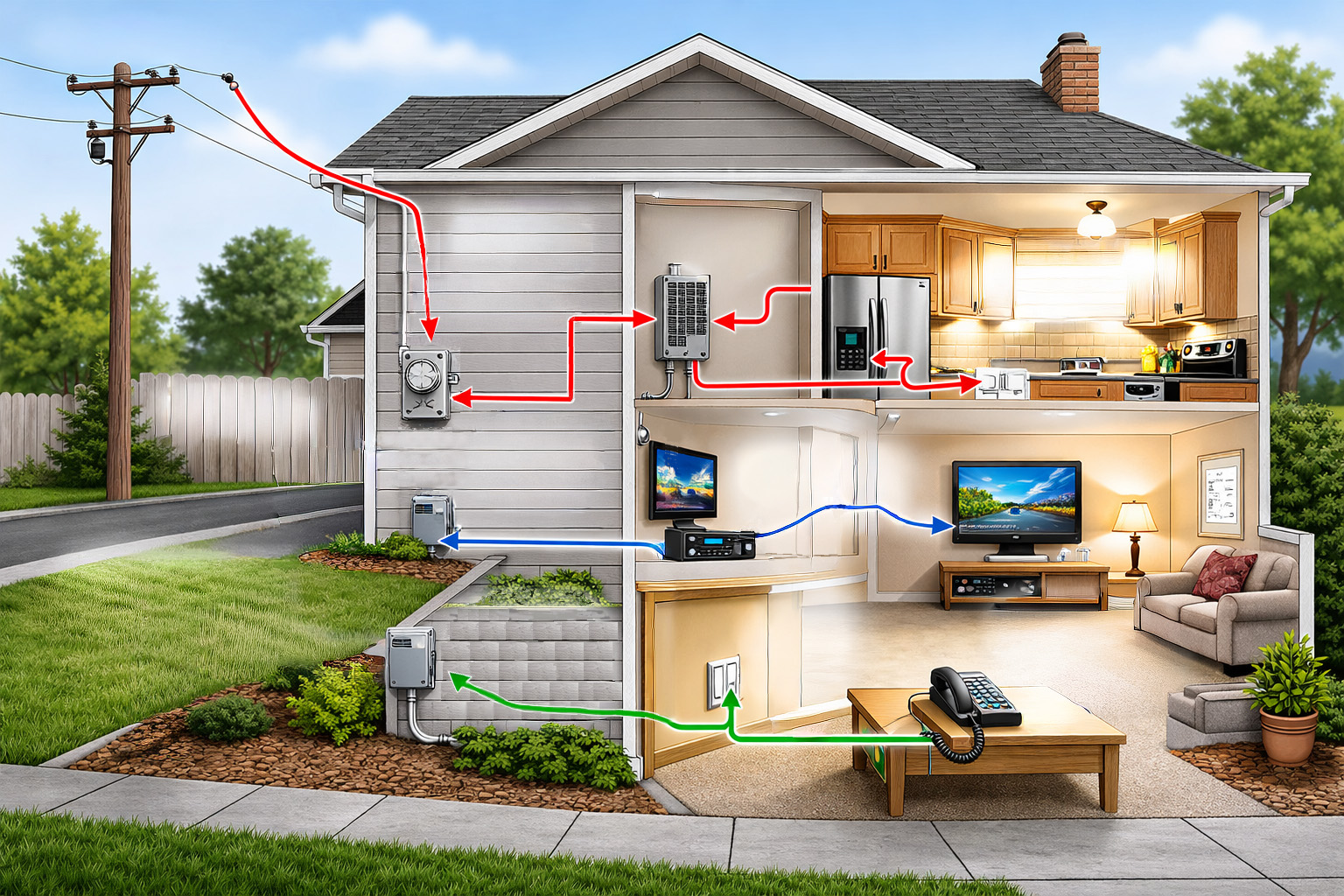
When most people think about electrical surges, they picture a lightning strike hitting a power line and sending a spike of energy into a home. While that does happen, it’s only part of the story. In reality, your home is connected to several different systems, and each one can act as a pathway for damaging surges. Even more surprising, some of the most common surges don’t come from outside at all; they originate from inside your home.
The most obvious pathway is the electrical service itself. Power travels from the utility pole into your home through the meter and into the main electrical panel, where it is distributed to outlets, lighting, and appliances. Any disturbance on the utility grid, whether it’s lightning nearby or sudden changes in load, can send a surge along this path. Once it enters the panel, that excess energy can quickly reach everything connected to your electrical system, from large appliances to sensitive electronics.
However, the electric lines are not the only way surges can enter a home. Cable and internet lines also provide a direct connection from outside utility infrastructure into your living space. These lines typically feed devices like televisions, modems, and routers, and because they are conductive, they can carry surges just like power lines. A surge entering through a cable line can travel into a TV or modem and then spread to other connected devices, especially when systems are linked through power cords or data cables.
Telephone lines, while used less frequently today, still present another potential entry point. Many homes continue to rely on them for alarm systems, communication systems, or legacy connections. Like cable lines, telephone wiring is often routed from the same utility poles and can carry unwanted voltage into the home during storms or grid disturbances. Even if they aren’t actively used every day, they remain a connected pathway that shouldn’t be overlooked.
Many homeowners don’t realize that some of the most frequent surges originate inside the home. Everyday appliances that cycle on and off, such as air conditioners, refrigerators, and washing machines, create small but repeated electrical disturbances. When a compressor or motor starts up, it draws a sudden burst of energy, and when it shuts off, it can send a brief spike back through the system. Even smaller devices like vacuum cleaners or power tools can create these momentary fluctuations. While each individual surge may be relatively small, their cumulative effect over time can gradually wear down electronic components.
These internal surges are especially important because they often go unnoticed. Unlike a major lightning event that causes immediate damage, these smaller spikes slowly degrade equipment, shortening the lifespan of appliances and increasing the likelihood of failure. It’s a gradual process, but one that can lead to costly repairs or replacements over time.
Adding to the complexity is the fact that all of these systems: power, cable, and telephone are interconnected within the home. A surge doesn’t necessarily stay confined to the line it enters on. It can move from a cable line into a television, then into the electrical system, and ultimately affect devices in entirely different areas of the house. This interconnected nature is what makes surge protection more than just a single-device solution.
Understanding how surges travel is the first step toward effective protection. Because surges can originate both outside and inside the home, and can enter through multiple pathways, a comprehensive approach is needed to minimize risk. By recognizing these different entry points and sources, homeowners can make more informed decisions about how to protect their homes, their electronics, and their long-term investments.